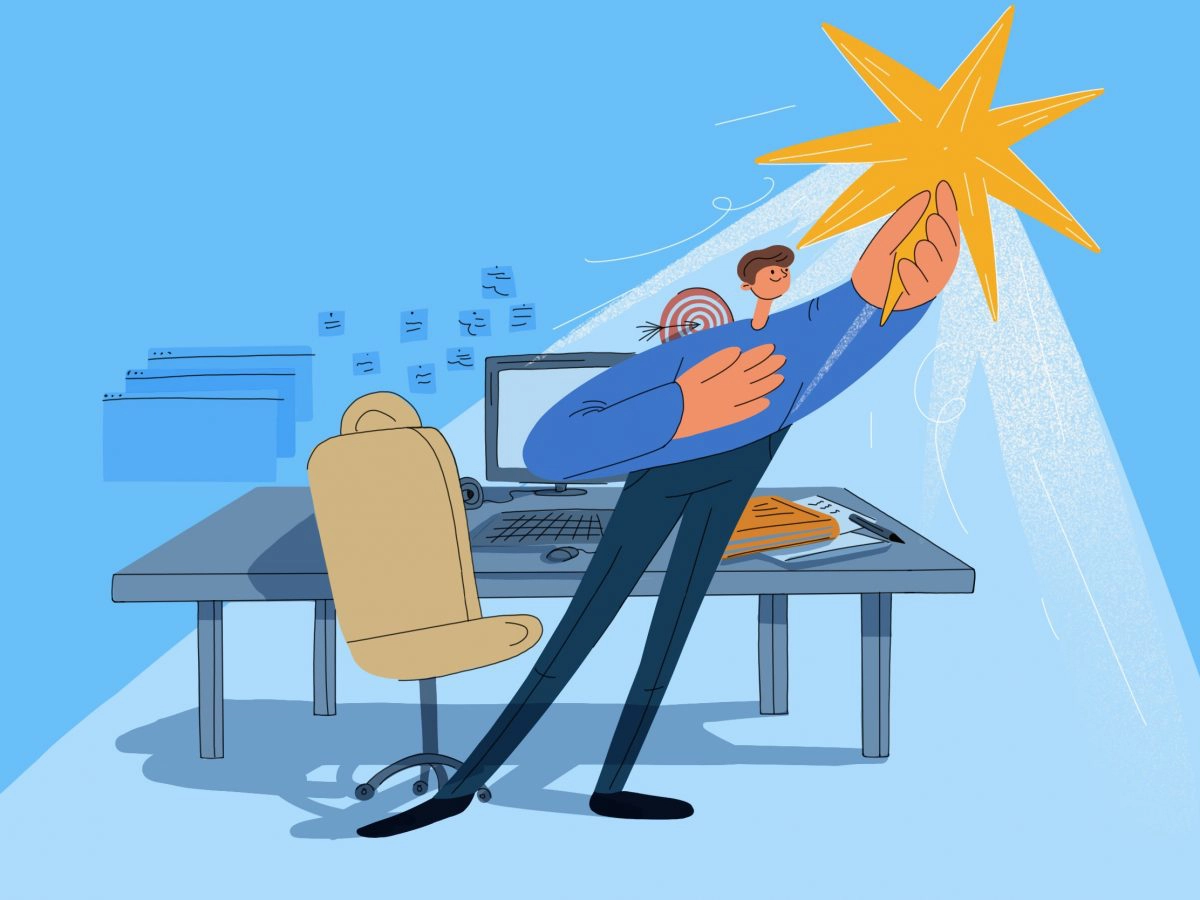

This is why you can't really get anything done and get distracted easily.
Multitasking is so 2020
Multitasking used to be praised as a strong skill. But over time, it's become clear that completing one task before starting another leads to better and faster results. Multitasking is overrated. So, what happens to your brain when you multitask?
The battle between the brain hemispheres
When you fully focus on task A and suddenly task B pops up, like a message, email, or something else, your brain hemispheres split in two. One half keeps task A in the back of your mind, while the other half takes care of task B. Switching from task A to task B costs your brain not only time but also energy. Precious energy.
You might wonder if multitasking doesn't just lead to average results. But that's not the case.
Switching = killing
By switching between tasks, your brain slows down. Even if task B is just responding to a message, it costs your brain precious time and energy. Because once you're in the flow, focusing becomes much easier. Unfortunately, we rarely get there because our brains keep struggling in the initial phase.
Flow chart
The red parts of the curve are the startup and ending phases. In these phases, focusing requires relatively more effort. The green part of the curve is the phase where you're in the flow. Focusing costs less effort because you're in the zone.
Startup phase, flow phase & ending phase
Between certain points, you get easily distracted because your brain has to work hard to stay focused in these phases.
The flow chart explained
- The more you're in the flow, the less effort work costs you
- Before you can get into the flow, you have to deal with the startup phase
- The startup phase requires relatively more effort from your brain
- Unfortunately, we often stay in the startup phase all day
- This is due to distractions: from messages to requests from colleagues, social media, and other interruptions
- Every switch brings you back to square one
Conclusion
If you get interrupted in the startup phase, you start over after each interruption. It will keep costing you a lot of effort to focus throughout the day.
There are days when you never get out of the startup phase. This can be because you check your phone every 15 minutes. The result? It costs you a lot of effort to work on the task all day.
And now? Keep going!
What will you do the next time you're in a startup phase? Make a promise to yourself to only put your phone away in the initial phase. Work focused, even if you'd rather scroll through your phone. Bet you won't even feel the need to get distracted after the startup phase?